Many of the concerns of our visitors and fans of the conversion of vehicles to electric are the homologations. The first thing to know is that although most conversions follow a common pattern, the certifications for each of the reforms that are made are different, as they may or may not affect a certain aspect regulated by a directive.
For example: All vehicles to be converted must have a battery bank, but one may need a small bank, 70kg of batteries, which can be placed in the boot, without any contact with the passenger compartment and where the chassis and maximum axle mass distribution have not been modified. While another is 250kg, and changes the maximum axle load distribution allowed for that particular model. In this case, one may require a simple certification that the battery pack does not exceed the maximum distribution, while the other may require additional testing, as required by the laboratory.
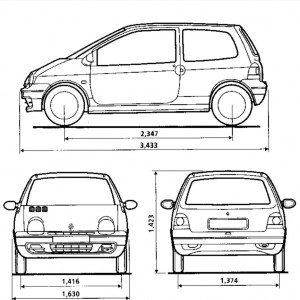
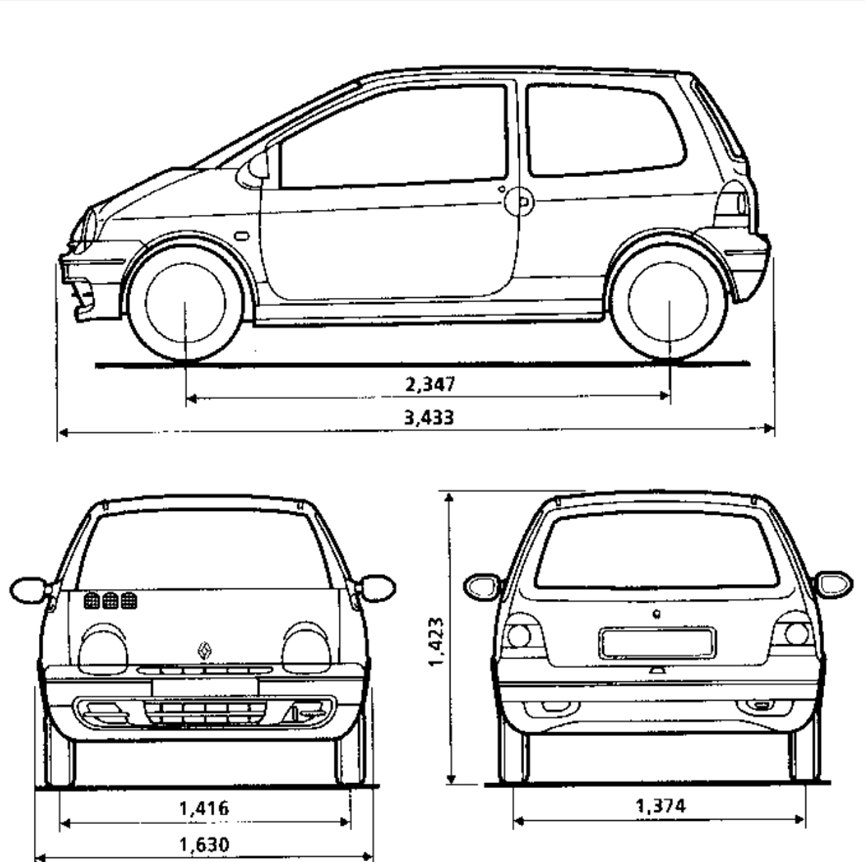
Physical dimensions of the Renault Twingo concept car.
This is just an example to let you know that each conversion is different, and that while some conversions may need some certifications and therefore some tests, others do not. It is therefore necessary to thoroughly analyse each conversion, design it with the homologation and the modifications to be made in mind, and as a general rule we can advise that the vehicle should be touched or manipulated as little as possible, that the weights pre-set by the manufacturer should be maintained, try to use an engine of similar power, etc.
There are some classic changes that will always be taken into account when certifying the modification:
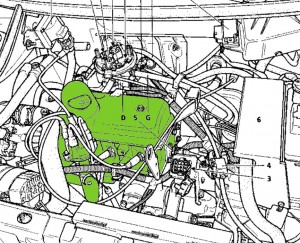
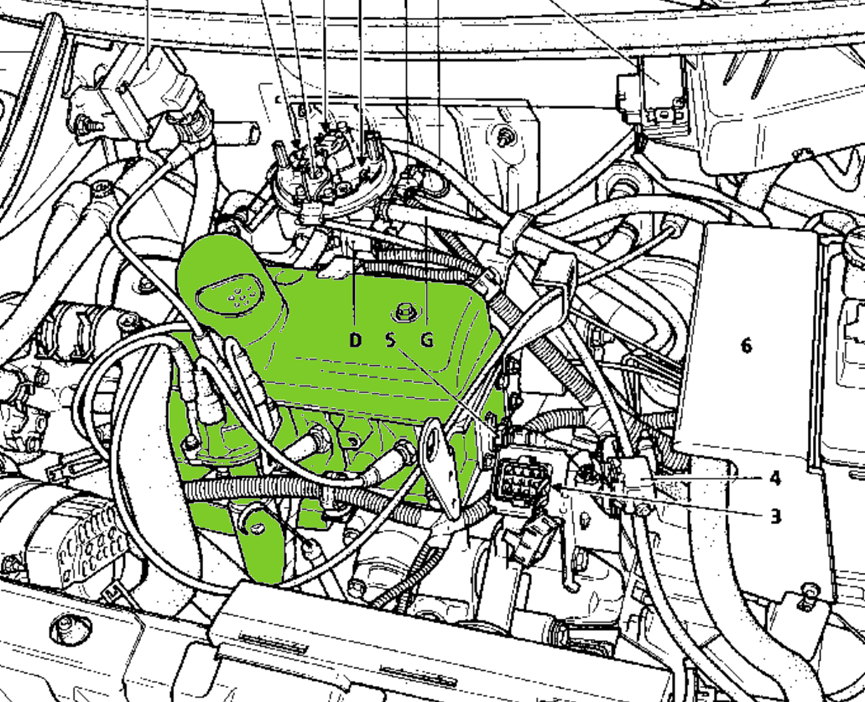
Replacement of the combustion engine The following is an illustration of our prototype retrofit using a Reanult Twingo as an example.
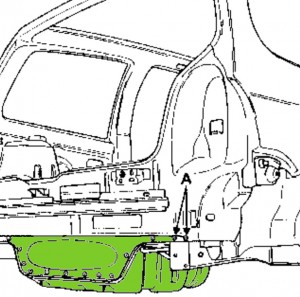
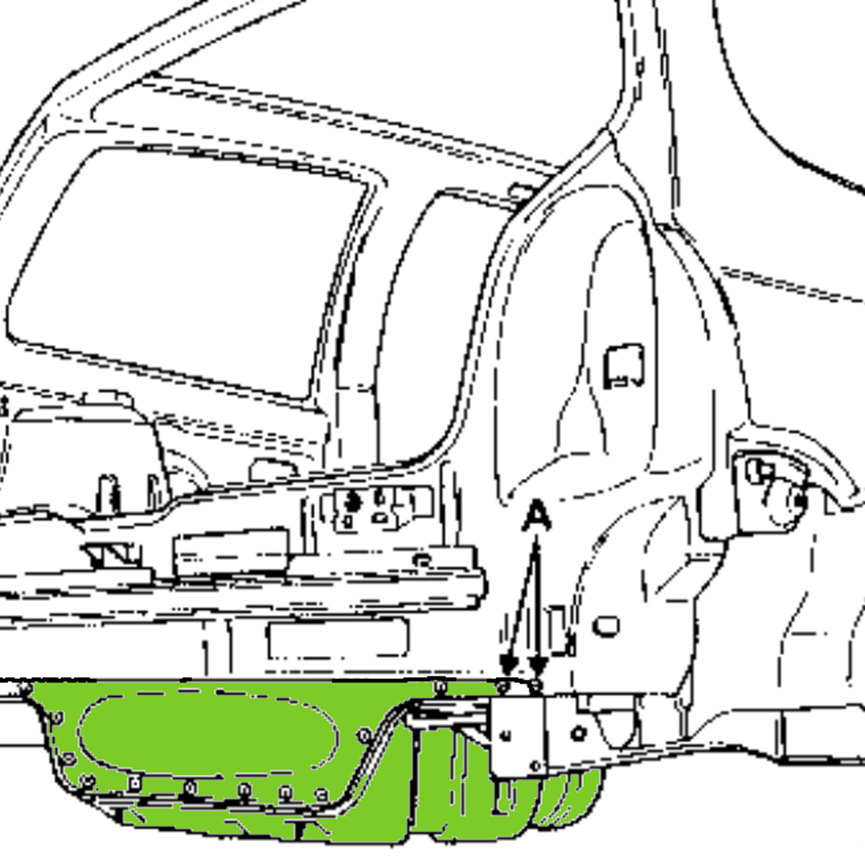
Elimination of the fuel tank.
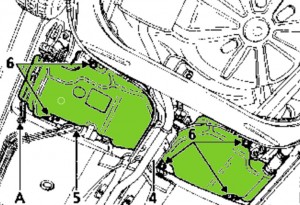
Addition of a battery bank.
This is an example of the classic modifications, although many more are normally made, such as the passage of high voltage cables, the removal of the alternator, the addition of a vacuum pump for the braking system, and each and every one of these modifications needs to be certified in Spain by a competent laboratory designated by the Ministry of Industry.
So let's see what we are dealing with at the moment of truth.
Introduction to Spanish procedures and legislation.
Any small or medium-sized company that needs to work with regulations, even if this is not their day-to-day business, knows that it is a complex, tedious and often confusing task.
Legislation should define processes, procedures, requirements, rights and duties, but in a way that is intelligible to those to whom it is addressed: the citizens.
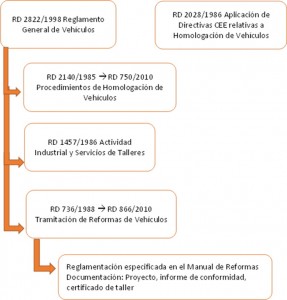
When we started looking for legislation related to this matter, elektrun gradually uncovered the jumble of legal texts that apply. Of course, many of them are old, and by necessity they have been renewed, the problem is that there are constant mentions of texts that have already been repealed. The only way to avoid getting lost in the end is to make a map:
Finally we come to RD 866/2010, which deals with the processing of reforms made to vehicles after their registration. This is our case. In this RD, the reforms are typified, which are later developed and specified in the Reforms Manual. At last we see the light, but in reality, it is only the beginning. This reform manual lists all the reforms considered important for each type of vehicle, classifying them in what it calls Reform Codes, indicating the regulations or Regulatory Acts to be applied for their processing, the type of application of the same, the necessary documentation as well as specific tests in the technical inspection, if any.
In terms of documentation, there are three key points: technical project, certificate of conformity authorised refurbishment service and workshop certificate It doesn't seem too complicated!
And why do we say that arriving at the Reform Manual is only the beginning? Because this document refers to the European legislation in force. When we had already got used to the BOE, we entered the EUR-Lex! Again, dozens of regulations, many of them in the process of being updated.
One of the biggest drawbacks is that these regulations are applied in the manufacture of new vehicles. They were created to ensure that vehicles manufactured in Europe meet a series of requirements, mainly in terms of safety and the environment. We start from a different assumption from ours: we are not vehicle manufacturers, we simply want to transform some of the characteristics of an existing vehicle. This means that it is not always trivial to apply the requirements to our case, and that in some cases it is not clear whether we really have to do so. Of course we agree that it must be ensured that the reform does not act to the detriment of safety.
This drawback becomes more apparent when the practice of vehicle conversion in Spain is not very widespread. In reality, it is possible to count the number of cars that have been converted and legalised. This means that the official and consultative bodies are not always able to give you the right information, because they have not been in the situation before and do not know how to proceed. They talk about homologation of a vehicle when in reality we do not want to homologate, but to certify the reform in order to obtain a vehicle registration certificate. Ultimately it is the same, legalising the vehicle for circulation, but we understand that the second should be a simpler process? As an anecdote, when we started to ask for quotes to the authorised technical services of reforms, they included among the tests to be carried out a shock test.
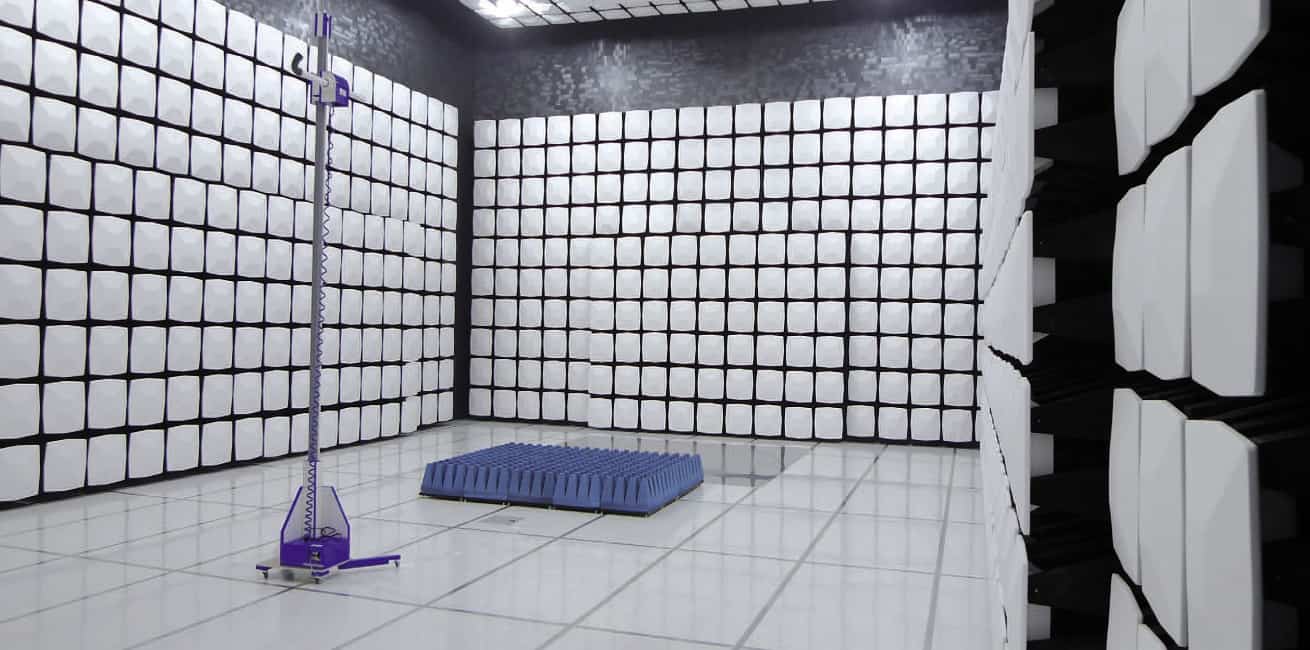
Well, of the three key documents, the certificate of conformity is the most difficult to obtain. Not because it is difficult to obtain, but because of the lack of clarity and the high budget required. Once again, we are treated as manufacturers, but we are not: how can we consider legalising the renovation if the tests required to obtain the certificate of conformity cost around €30,000 (according to IDIADA)? A mere test and a formality, whose cost should be symbolic in order to encourage and promote the transformation of vehicles, is the biggest obstacle encountered in the whole process. Is bureaucracy holding back technological progress? It has been explained to us that the electromagnetic compatibility test is complex, and the necessary equipment is very expensive, but is it really that expensive?
Conclusions.
It is obvious that regulations and standards are needed for any vehicle conversion or modification, not only to ensure safety but also to ensure standardisation and uniformity in modifications. Paradoxically, what has been done with these regulations produces precisely the opposite effect, misinformation and non-uniformity in procedures, prices and regulations. Where some laboratories may require a signed project, others may not, while the regulations may or may not require it.
On the other hand, the regulations are not up to date with current technology. As an example, we can refer to the regulation 100, where an exhaustive emphasis is placed on the H2 level standard produced by the battery bank, when nowadays, in the industry, lead batteries are not used, which are the ones that generate this H2.
The prices are exorbitant. What would happen if every car owner had to pay 15000€ to pass the MOT? Well, there would be hardly any vehicles on the roads and the car industry would disappear. And if we ask the question the other way around, what would happen if you had to go to the nearest MOT station to get a vehicle conversion approved and it cost €60? Well, the fleet of electric vehicles would grow very, very quickly.
The lack of information is total, if every company has to do the legal engineering work that we have had to do, elektrunIn order to find out the steps and procedures to get a renovation of this category approved, it is very difficult for workshops and small engineering companies to get started in this industry.
We understand that in other EU countries this procedure is done in one place or ITV station, it costs much less and is much quicker. It would be the equivalent of taking the vehicle to the ITV, leaving it for several days and picking it up once all the tests have been carried out and the necessary certificates have been signed.
This would be a summary of the current situation for certifying/approving this type of refurbishment.
Disadvantages
They are very expensive (from 1500€ to 8000€ per trial).
Lack of information in different organisations.
Slow (INTA can give you an appointment for 3 to 4 months)
Lack of competent bodies
More public standards are needed (different prices, testing).
No infrastructures (1 EMF chamber, INTA)
Wishes
They must be cheaper or subsidised
Rapidas and efficient (ITV type)
Standardisation and simplification of the process.
Re-use Type approvals
Agency specialising in electrical conversions
Facilities for small businesses, workshops and the self-employed in the conversion to electric vehicles.
Incentives
Financial assistance for laboratory testing for small companies and the self-employed.
Incentivise type approvals(e.g. free of charge. If a type approval is granted free of charge in exchange for being public so that any other company can use it, this would lead to an explosion of immediate electrical conversions).
Elimination or tax cuts to converted vehicles (not only do you reduce your CO2 footprint but you recycle one vehicle and avoid producing another).
Aids to new conversion companies. A small company like ours could produce an electric vehicle every 6 days (+ 6 months of certification/approval). If you incentivise these companies, you are incentivising the most sustainable electric vehicle, which is the one that is converted, not the one that is manufactured.
Note to the readerIn this document we detail as engineers and not as lawyers, our experience in obtaining certification/approval for this type of reforms in Spain.
The state, through whatever government is in power, has no intention - quite the contrary - of encouraging the use of clean energy. Do you think it is going to give up taking more than half of what you pay to fill up your petrol tank in taxes?
But this is not unusual. The same goes for renewables. Again, the state does not allow you to install solar panels on the roof of your house to have free electricity. Of course, with ex-presidents of the government on the board of directors of the big companies, how can they not legislate in their favour!
In the case of conversions of cars with internal combustion engines to electric, if possible, an even more absurd and delirious legal perversion is created when the state imposes on you with a multitude of clumsy ambiguities and absurd bureaucracy the obligation to obtain technical certifications of already approved elements just because you have changed the engine of the vehicle. Because the rest of the mechanical parts and the chassis, which are much more important for safety, are the same and are already approved!
The automobile industry, which is also deeply involved in government, looks askance at your experiments because it knows that the barriers to entry for the production of electric vehicles, especially for urban mobility, are very low compared to the very costly production of today's obsolete and polluting combustion engines.
In fact, as Sergio Marchionne, president of FIAT-Chrysler, says, the car industry today is incapable of generating consistent profits, burning an impressive amount of capital on evolving an already obsolete and conceptually harmful combustion engine technology that would be more useful in any other sector, and he fears that with self-driving cars and the latest generation of batteries, the car manufacturing business will go to China in the hands of technology companies like Apple, Google or Samsung.
I would like to take this opportunity to thank you for your work and congratulate you for your initiative and your website while I study how to convert a small car into an electric car!
I totally agree with you. But although it may not seem like it, the pressure for renewable energies (even if it is only social and media) is getting stronger and stronger. Electric mobility is a reality that sooner or later is going to impose itself, surely little by little, but like all changes, it always starts with small steps. The pressure of oil and oil taxes does not have to be a fact to stop advancing, even if it is at minuscule levels. If I convince you to convert your vehicle to electric, and you convince 3 more, that's 4 more. That's how it is.
Anyway, thanks for the comment, we must always be aware of who is goliath.
While the country is bankrupt, swallowing and swallowing. They just need to change the laws and that's it. Because Spaniards steal from other Spaniards (all of them) but of course if we have to put up with thieves stealing from us, what do we do? Not to speak but it is worth saying that we regulate prostitution and with the infrastructure we have in our country in 5 years we are all rich. The key word is to flee from idiocy and long live the comradeship of the underground market.
I am delighted with the work you are doing, just as in the USA there are companies that even sell ready-made kits and a list of workshops for assembly and approval, here we are way behind,
It is clear that perhaps more media pressure should be applied, but it would help a lot if the city councils, especially those in cities with high pollution levels, would take measures to make things easier...car parks for recharging...green zones in commercial areas...while you shop and recharge your car, taxes...workshops..., although it is clear that without the government we do nothing, green government. We have the technology and the will, all we need is the will.
ev west is the company that sells these kits in the USA,
Hello, thank you for your comments. I agree with you, but something tells me that there is still a long way to go in facilitating the work for the sale of these kits, because of the bureaucracy and the documentation required in the European Union. Best regards
Hello, I would like to contact you about these kits + homologation (even if it is outside Spain in Europe) since we need to homologate the car if or if and without spending 35000 euros in laboratories and tests. Best regards,
Good work, I encourage you to keep up the good work,
We have to fight to make the recycled electric vehicle an option in Spain.
We would like to see the possibility of converting a delivery van, such as a citroen berlingo / peugeot partner.
I like your initiative very much.
I also know from experience how difficult it is to get it homologated. I wanted to convert a car to hydrogen and no more and no less than they asked me for the homologation certification of the vehicle brand... the car manufacturer had to give me their approval of my modifications... as if they had nothing else to do but to check the modifications of individuals in their vehicles.
The conclusion I came to is that you practically have to be a vehicle manufacturer to be able to modify a vehicle made by you, as I don't think a manufacturer will ever give you their approval, as it doesn't do them any good and they can get into trouble if you have done something wrong in terms of your own safety or the safety of others.
Good morning.
I wonder what happens with security. I don't rule out that, in a personal project, things are done with good intentions, or even with care. But in the real world, there are a lot of bunglers, who make you a fix, and then you have accidents.
First of all, we are talking about providing a "sustainable" solution to a problem (mobility). But there will also be those who long for their old classic car and want to extend its life.
To bear in mind: it is not only the fuel that pollutes. The process of manufacturing and scrapping the elements that make up a vehicle has as much or more impact (carbon footprint) than the use itself. This is both positive and negative: we are reusing a structure, adding some much more polluting components (batteries, engine, etc.) and discarding others (which I suppose will be recycled...).
The second point to bear in mind. An old car has inferior safety measures to a new generation car, and I am not only referring to maintenance, but also to elements and systems that are appearing in the new regulations.
At this point, we can come to the conclusion that, at best, a person will want to drive his Renault 5 of the year 80, without a/c, d/a, e/e, c/c, not to mention fog lights, third brake light, abs, esp... I would even dare to say that they have no headrests or seat belts in the back seats (depending on the model, maybe).
Not even, for example, a Renault 19 of 92 (25 years old, already a classic), much more equipped, I don't think it would be worth it, because one day the windows fail, another day the doors lock, etc.
In conclusion, you are not going to make a practical car.
And to put it on a track, I don't know if you'll need homologations, but I suppose other users will want the car next to them not to lose parts... But on the street, even less.
On top of all that, there is the safety of an electric system. I don't think the Prius will spark, not least because it will have been certified and approved once and produced a million times more. But you have to be careful about that. The kits look good, because they seem to come ready to isolate everything well, and they are designed for that (it's not like putting a lift motor in each wheel...).
In short, your project is for lovers of your classic car, or for you to prepare a sufficiently large set of Twingos with similar characteristics, in order to amortise the cost of homologation.
And to do it in a serious way, having tested everything, consumption, autonomy, charging capacity, performance, limits (temperature, etc.), safety... even the possibility of using a small auxiliary fuel engine, or brakes with regenerative charging capacity, as well as an efficient charging system (plug-in). On the other hand, I hope that one day, the batteries will be recharged like the old video cassette or CD chargers, putting the discharged ones in and returning the used ones, to charge them without having to leave the car stationary.
In that case, I do see the feasibility (technically, ecologically, economically and with a relatively practical sense) of converting a combustion car to electric. The rest is a waste of money.
Greetings and thanks for the site!
Hello, we could also look at the possibility of homologating the vehicle modified to electric in a country of the European Union, according to its regulations and at more affordable prices, I do not know if it would have to keep the registration of that country and also if it would be economically worthwhile or if our lousy and corrupt politicians have also closed that possibility. We Spaniards are a too tolerant people with the abuse and oppression to which politicians, civil servants, bureaucracies, administrative silence, bad judicial system . . . . . . . . . . .
First of all, thank you very much for your work, it has become clear to me what is stopping people from switching to electric vehicles.
I'm just curious, can all this bureaucracy be avoided by having the vehicle homologated in another EU country, so by receiving the homologation certificate from the other country, are there any problems in validating this certificate?
But what are they going to recognise you? Can't you see that they're really crazy? They ask for a car crash test! To freak out! To say that you have built a car is ok, but to remove an engine and put batteries that weigh even less? It is not enough to them to publish a guide with three keys as they are not mounted, fixed and distributed the batteries (neither it is necessary that tapoco is distributed the passageros with manual) to prohibit big things.
In short! The country that lives certitulis does not know how to get anything else out of it!
Hello, I have a question, and if I convert my old car to electric in Germany and I bring it to Spain registering it as electric, is it profitable, can it be done, what steps do I have to follow, thank you.
Hello,
I am excited to see what you are doing. I've been in the sector for 12 years and I'm going to tell you what someone in the ministry told me under the table. Since Spain joined the EU, the car industry has had to be eliminated in order to promote the tourism industry. Hence almost all the obstacles, confusion and problems to homologate any reform or new car created here.
It is possible (despite being the only EU country that applies all the regulations that have been approved, what a coincidence), but if you make it sufficiently expensive and cumbersome, it ends up not being interesting. All my encouragement and good luck !
I am a mechanic and I have been working on a project for an atrocious time and I have converted an opel Corsa to electric with many setbacks but I have been improving and I think it is great to be able to support you, even with my opinion, I totally agree with the information you are spreading and by joining together one day we will get them to recognise that we are right, we have to recycle.
Good morning. What an interesting website!
I am already combining my car with an electric scooter, and I would love to be able to convert my car and use 100% electric mobility.
But how is the bureaucratic situation today (January 2018)?
I see that the last blog post rages from mid-2016.
Has anything changed? Has the government made it easier for us to change the type of fuel we use to get around? Shouldn't it be something more than simple taking into account that the car has already passed all the necessary homologations,,,, another thing is that one wants to put more power, more weight, or any change in its characteristics of origin..... but if we stay within the parameters of the original model???? It is impotent to see that things like this could be done to achieve a huge profit in a very short time,,,,, but as it is not "business" for some, come to put obstacles and more obstacles ....
Hopefully there will be more progress in this direction. I think the most ecological thing is not to have to re-produce a car from scratch, but to use a petrol or diesel car. ....
Thank you very much for your project and I send you all my support from Barcelona !!!!
For everyone's information you can already buy a new Tesla model3 electric car for 33000€.
It's cheaper than converting and you get a lifetime warranty on everything except tyres, which you pay for yourself.
In addition, the fast charges of the superchargers charge the cars in half an hour and a range of 400 kilometres until a further charge of half an hour more.
They also have built-in artificial intelligence autopilot and avoid accidents for you. They even look for parking spaces while you're shopping or running late for a meeting.
I could be telling the Bible in verse about this Tesla Motors Model 3 for €33,000.
See for yourselves at http://www.teslamotors.
By this I mean that the transformation of a combustion vehicle to electric 100% is very expensive and should be done for free or at least help to make this possible for all budgets since today there are luxury cars with lifetime warranty and free lifetime recharges of energy and high-level finishes for 33.000€ brand new.
Greetings to all.
Well, let's feed the Americans or the Chinese, who already manufacture them cheaper and more efficiently. I would bet on companies like this one, Spanish, but of course Amancio Ortega, I suppose they didn't make it easy for him either.
Hello Vincent,
I don't know much about the subject and I see that your comment is old but I think it has never been sold for that price, no? In Spain the model 3 starts at around 50k Euros? https://www.diariomotor.com/coche/tesla-model-3/
If it is true that homologation in other EU countries is cheaper and quicker, the solution is written. The transformation is done here and it is approved outside .....
Congratulations on your work.
This is a subject that has interested me for a long time, as I have two old vehicles: one fifteen years old and the other twenty-two years old. I have spent my money on both of them to keep them useful and safe, and now I would like to upgrade and transform the older one, but the price and the bureaucracy are not in my favour.
If this does not evolve and in view of the price of new vehicles, I will have to go by bus.
The central issue is that the government seems to protect the business of large companies... That somehow influence their decisions... But this is a short-sighted view, the development of small conversion companies in the future could become a fabric of suppliers for large manufacturers, a buyers' market accustomed to the advantages of electrics... A 'win to win' scenario. Unfortunately in Spain there is a common 'lose to win' approach.
in spain nothing is done while all our government and those who come and those who came do not want to govern but to steal. This is how they turn Spain into the country of the chorizo. Just vary about 10 laws on electric and solar cars, regulation of sex workers, that are compatible with our constitution and that on top of that they work against everyone illegally. Not to mention that anyone can hack your car and kill you because they don't have access to a manual control. Not to mention putting little plants on balconies and windows and roofs of big cities and have clean air as if you were in the mountains and avoid hundreds of thousands of deaths from cancer and others a year. This must be bottoming out by now and if not, long live the black economy and a good quality black market at a good price. If the government is useless someone will have to do it. I am not allowed to camp in the mountains because I scare the animals. Human animals too, except when I carry money. Joña
Manufacture me in the workshop jun electric quadricycle with a truck alternator some batteries also powerful truck put a couple of solar panels on top to charge and 80km/h and if you want a generator gasois inverter and you have a hybrid for about 1500 euros and zero cost. Cachondeo is what everyone here is going for. And this with the cost of the material in Spain that in other countries is less than half. They also want to tax the sun. And I would like to know how far the Spaniards are going to swallow because here he who does not run flies. And you steal from me, I steal from your brother, the government steals from both of us and in the end everything will be left to the Chinese who don't even speak Spanish. We have to boost the economy and the black economy given the uselessness of our governments who, by the way, do the opposite of what the constitution says. In other words, let everyone do what they want and that's that.
And is it not possible, for example, to buy a car in the USA or another country that allows it to be converted more easily, have it homologated and import it to Spain once it has been homologated?
Because the prices you indicate, you get the feeling that it would be much cheaper this way.
Hello,
Definitely not in the USA, because conversions done there for the EU are as if you had done them in a garage, they are not valid.
Those made in the EU would have to be looked at, with the logistical costs.
Best regards
Yes you can, but we don't know the technical obstacles on return, how the DGT will interpret the entries in the technical data sheet with respect to the homologated reforms in another country.
Hello, I am also a vehicle electrifier. I have already been where you have been. It is complicated and expensive, indeed. But do not come to say that it is only in Spain, because although it differs between countries some things, the regulation on which the 750/2010 is based is the 2007/46 EC which is common to all Europe and the transformations and their requirements are similar throughout the EU. In fact I tried to pass in RDW (Holland) and TÜV and it was not worth it.
Hello,
Yes, if the directives and regulations are of European application, what is Spanish is the interpretation of these regulations. In some countries they are interpreted for €2500 per test and in others for €100.
If you like, tell us about your experience in the Netherlands.
Best regards
Hello, is it not possible to transform a car (with foreign registration?), homologate it in another country where it is really simple and cheap and once the COC is obtained there, register it in Spain?
Hello,
Yes, it could be done. We would have to see what technical impediments the DGT would put in our way when they see the foreign Ficha técnica with the homologations of the reforms to which the vehicle has been subjected.
It is an option, which we have not explored.
Best regards
Very good
I believe that the conversion from combustion to electric vehicles is a road of no return.
As always, the bureaucratic impediment goes hand in hand with the private capital of oil and automotive companies interested only in continuing to make money.
profits with no regard for the environment or the economics of consumers.
But the road, as I say, has no turning back.
I am one more who wants to convert his vehicle to electric.
Congratulations on your work.
Best regards.
I don't know if you are still active. Seeing that the last entry is from 2016 and precisely about the bureaucracy holding you back, I hope that this has not prevented you from continuing with your excellent work.
Regarding the price set by IDIADA, you mention €30,000. However, you comment in the disadvantages that the cost is between 1,500 and 8,000 euros).
In any case, I understand that for LPG or CNG conversion there is a "standard" homologation. Would it be possible to get something similar for EV conversion? I wonder what it was at the time that made things easier with gas and whether a similar scenario will soon be possible with electrification.
If this is achieved, I understand that this would open the door to retrofitting, but would they all have to follow the same style guide? E.g.: always put batteries in a certain location, or not homologate vehicles older than X years.
Hello,
Yes, we are still active. Yes, those are the homologation prices given by IDIADA at that time, we have not contacted them again.
This standard homologation, called Functional Equipment, can be used for a short run of vehicles, but it is not our idea at the moment, it is easier for us to homologate the conversions individually for the time being.
Yes, not just the same style guide, but dozens and dozens of rules and articles to follow.
Best regards
Very good page and the only conclusion I draw is that the multinationals in the sector don't want competition... !! that's what the politicians we vote against must legislate against!
Well, I have a Twingo that I hardly use and I have seen the conversion and I would be very interested in doing it, but of course with more affordable costs... I am not going to be ecological recycling a Twingo so it will be more expensive than a 2015 Prius.
Having said that, I would like you to explain why you do not contemplate the homologation of small series or "functional equipment". Moreover, could you offer to whoever is interested in contracting you only the legal part and that each one acquires the materials and then assembles them in a reliable workshop?
Greetings
I have a question, I have an EV that was wrongly homologated by the manufacturer, an Opel Ampera, they take the data of the maximum power of 111kw to calculate the CVF that comes out 21cvf an absurdity when the electric motor is of 150cv a combustion engine to charge the batteries of 85cv and the battery is of 10kw, in the back of the coc gives a consumption of 130wh/km during 83km we are many affected by this subject paying 250€ of taxes as if it was a truck or a ferrari, thanks.
Hello,
In my experience this is a fight with the administration and the official on duty.
I would investigate in depth what regulation is taken to make the power calculation, and see if it really specifies how it is calculated and if it does not say that the power of the electric motor must be added. Because by the same rule of three, they would have to add up the power of all the electric motors of a traditional vehicle, such as the starter motor, the pumps or air conditioning, etc., and they don't do that. But before defending this thesis, I encourage you to join and read the regulations where it is specified how the calculation is done.
Best regards and good luck.
i have asked in the school of engineers of zaragoza. at this moment they give the sensation that nothing exists congreto in the colleges of engineers, is where they have it but clear they do not put sticks, you fill up some forms asta they put you an engineer
general strike in this country as soon as they smell to create jobs already this bundled I am industrial master of automobile or electro mechanic at this moment I am in conditions to create 16 jobs I have four
engineers two women in europe are already being homologated let's go to the street and see what happens I wait for you.
an allusion
Hello: Does anyone know the address or contact details of this company "ELEKTROCARS" ?
Do you know of any company that is currently converting cars to electric.
You can also reply to my email address, it's easier for me. calima_barco@yahoo.es
Thank you very much.
MAE
I am writing in April 2020, during the state of alarm and confinement due to Covid-19. First of all congratulations for the work done and the information. I see that the last entry is from September 2019, are you still active and is there any news regarding the approval processes in Spain? Have you worked alternative routes in other EU countries or do you know of any case?
Thank you very much!
Yes, we have studied the routes in the EU, and it is not viable for our project, because of the logistics and then having to continue to deal with the Ministry of Industry and ITVs to import the conversions. The homologation issue is now more complicated with the new regulations that include battery testing. So we are adapting for it. Thanks
The homologation of the Twingo cost around 6000€-7000€..... But it is not only the economic cost but also the resources in hours and time that make it not worthwhile for an individual reform...but for 20 or more vehicles.
I am an absolute novice in mechanical matters but I am passionate about the work you are doing.
Even after reading several articles and trying to find the answer, I still have no way to clarify a doubt.
As I understand it, the purpose of the MOT is to check the safety of the vehicle and to check that it does not pollute more than the legal limit. So, if I have a combustion car with a passed MOT and I modify the engine, changing it for another one that pollutes less, why is the homologation so expensive?
Battery homologation and political conspiracies aside, of course.
Well, the ITVs not only check that the car is safe but also that the modifications you have made are approved, and approving them is expensive, who knows why, due to lack of laboratories, lack of interest or not wanting to make the conversion industry move forward. Namely.
It is simply a question of seeing that there is a market niche and not being hypocrites. By getting involved in facilitating massive conversions (just like the LPG/CNG conversions, which for 1000-1500€ you can have them converted), a lot of money, work, parts,... and above all, it would accelerate the achievement of the apparent and hypocritical governmental dogma of caring for the planet. There are real, direct, easy solutions and they do not apply them, HYPOCRITES!!! !!!!. I would add that the serious thing is that we are all hypocrites because we choose them as our representatives, and they are not very deceitful, we know that they lie to us but I would not like to say that we like it but we do not dislike it either. The ordinary Spaniard must come out of his fearful conservatism and his bubble of constant resignation, he must evolve and believe more in himself.
Continuing with electric cars, imagine if we were to force them to focus on this issue by 2022, and I believe that it is right now when we should push this: the climate for change is already on the streets and people are still using combustion/explosion cars in very good condition. With a whole infrastructure of the electric changeover with measures, aids, charging points,... Spain, Europe,... would have the conversion of the national/European car fleet in a very short time. In addition, people could have more savings, they would no longer spend on the ruin of a new car, and the environmental problem in this part would be solved.
I would bet that if with the same desire that they take the tremendous salary of parliamentarians to make the slacker day after day in Parliament (eye we all allow it, we continue to vote for them, we force them to something else) and the shameful and dastardly behaviour, were focused among other things on this, I would ensure that in 2025, without exaggeration, we would already have more than 50% of electric cars. Who would not convert their current car that is working well, that is in good condition for 3000€-4000€ maximum to electric? These prices would be achieved and would be realistic if all that I indicate were encouraged, costs, labour, parts, components, etc. would be reduced... By the way, who remembers the beginnings of mobile phones? They were for the rich, they were huge and cost a lot of money, but they realised that if they allowed this luxury to the whole population they would earn more, and also with the possibility of massively testing a technology and solve more effectively the problems they had.
This resistance to something so logical, makes me think that if they just want to keep us under control and that the ordinary working man is trapped with a new car that is not worth what is being asked for it. A new car is a rip-off, but people have got used to paying such exorbitant prices for the mere whim of wanting to change, and perhaps having a 10 year old car that with 3000-4000€ would have the possibility of changing car; obviously the car in general has to be in good condition. A 10-15 year old car with a proper electrical conversion is perfectly valid and would compete with many new cars that are real sardines; and we would also reduce the cost of manufacturing another vehicle (less pollution, materials, more employment, more savings...).
I believe that in the end what I want will be imposed, but incomprehensibly it will take time, they want to see us and dominate us by having us trapped and deceived by their vile hypocritical actions, and remember, it is we who are to blame and we allow them to be our representatives. We don't care, because we keep stumbling over the same stone, election after election. Let us evolve as individuals and society and its representatives will evolve.





 Elimination of the fuel tank.
 Addition of a battery bank.
 This is an example of the classic modifications, although many more are normally made, such as the passage of high voltage cables, the removal of the alternator, the addition of a vacuum pump for the braking system, and each and every one of these modifications needs to be certified in Spain by a competent laboratory designated by the Ministry of Industry.
So let's see what we are dealing with at the moment of truth.
This is an example of the classic modifications, although many more are normally made, such as the passage of high voltage cables, the removal of the alternator, the addition of a vacuum pump for the braking system, and each and every one of these modifications needs to be certified in Spain by a competent laboratory designated by the Ministry of Industry.
So let's see what we are dealing with at the moment of truth.
 Finally we come to RD 866/2010, which deals with the processing of reforms made to vehicles after their registration. This is our case. In this RD, the reforms are typified, which are later developed and specified in the Reforms Manual. At last we see the light, but in reality, it is only the beginning. This reform manual lists all the reforms considered important for each type of vehicle, classifying them in what it calls Reform Codes, indicating the regulations or Regulatory Acts to be applied for their processing, the type of application of the same, the necessary documentation as well as specific tests in the technical inspection, if any.
In terms of documentation, there are three key points: technical project, certificate of conformity authorised refurbishment service and workshop certificate It doesn't seem too complicated!
And why do we say that arriving at the Reform Manual is only the beginning? Because this document refers to the European legislation in force. When we had already got used to the BOE, we entered the EUR-Lex! Again, dozens of regulations, many of them in the process of being updated.
One of the biggest drawbacks is that these regulations are applied in the manufacture of new vehicles. They were created to ensure that vehicles manufactured in Europe meet a series of requirements, mainly in terms of safety and the environment. We start from a different assumption from ours: we are not vehicle manufacturers, we simply want to transform some of the characteristics of an existing vehicle. This means that it is not always trivial to apply the requirements to our case, and that in some cases it is not clear whether we really have to do so. Of course we agree that it must be ensured that the reform does not act to the detriment of safety.
This drawback becomes more apparent when the practice of vehicle conversion in Spain is not very widespread. In reality, it is possible to count the number of cars that have been converted and legalised. This means that the official and consultative bodies are not always able to give you the right information, because they have not been in the situation before and do not know how to proceed. They talk about homologation of a vehicle when in reality we do not want to homologate, but to certify the reform in order to obtain a vehicle registration certificate. Ultimately it is the same, legalising the vehicle for circulation, but we understand that the second should be a simpler process? As an anecdote, when we started to ask for quotes to the authorised technical services of reforms, they included among the tests to be carried out a shock test.
Well, of the three key documents, the certificate of conformity is the most difficult to obtain. Not because it is difficult to obtain, but because of the lack of clarity and the high budget required. Once again, we are treated as manufacturers, but we are not: how can we consider legalising the renovation if the tests required to obtain the certificate of conformity cost around €30,000 (according to IDIADA)? A mere test and a formality, whose cost should be symbolic in order to encourage and promote the transformation of vehicles, is the biggest obstacle encountered in the whole process. Is bureaucracy holding back technological progress? It has been explained to us that the electromagnetic compatibility test is complex, and the necessary equipment is very expensive, but is it really that expensive?
Finally we come to RD 866/2010, which deals with the processing of reforms made to vehicles after their registration. This is our case. In this RD, the reforms are typified, which are later developed and specified in the Reforms Manual. At last we see the light, but in reality, it is only the beginning. This reform manual lists all the reforms considered important for each type of vehicle, classifying them in what it calls Reform Codes, indicating the regulations or Regulatory Acts to be applied for their processing, the type of application of the same, the necessary documentation as well as specific tests in the technical inspection, if any.
In terms of documentation, there are three key points: technical project, certificate of conformity authorised refurbishment service and workshop certificate It doesn't seem too complicated!
And why do we say that arriving at the Reform Manual is only the beginning? Because this document refers to the European legislation in force. When we had already got used to the BOE, we entered the EUR-Lex! Again, dozens of regulations, many of them in the process of being updated.
One of the biggest drawbacks is that these regulations are applied in the manufacture of new vehicles. They were created to ensure that vehicles manufactured in Europe meet a series of requirements, mainly in terms of safety and the environment. We start from a different assumption from ours: we are not vehicle manufacturers, we simply want to transform some of the characteristics of an existing vehicle. This means that it is not always trivial to apply the requirements to our case, and that in some cases it is not clear whether we really have to do so. Of course we agree that it must be ensured that the reform does not act to the detriment of safety.
This drawback becomes more apparent when the practice of vehicle conversion in Spain is not very widespread. In reality, it is possible to count the number of cars that have been converted and legalised. This means that the official and consultative bodies are not always able to give you the right information, because they have not been in the situation before and do not know how to proceed. They talk about homologation of a vehicle when in reality we do not want to homologate, but to certify the reform in order to obtain a vehicle registration certificate. Ultimately it is the same, legalising the vehicle for circulation, but we understand that the second should be a simpler process? As an anecdote, when we started to ask for quotes to the authorised technical services of reforms, they included among the tests to be carried out a shock test.
Well, of the three key documents, the certificate of conformity is the most difficult to obtain. Not because it is difficult to obtain, but because of the lack of clarity and the high budget required. Once again, we are treated as manufacturers, but we are not: how can we consider legalising the renovation if the tests required to obtain the certificate of conformity cost around €30,000 (according to IDIADA)? A mere test and a formality, whose cost should be symbolic in order to encourage and promote the transformation of vehicles, is the biggest obstacle encountered in the whole process. Is bureaucracy holding back technological progress? It has been explained to us that the electromagnetic compatibility test is complex, and the necessary equipment is very expensive, but is it really that expensive?
 Elimination of the fuel tank.
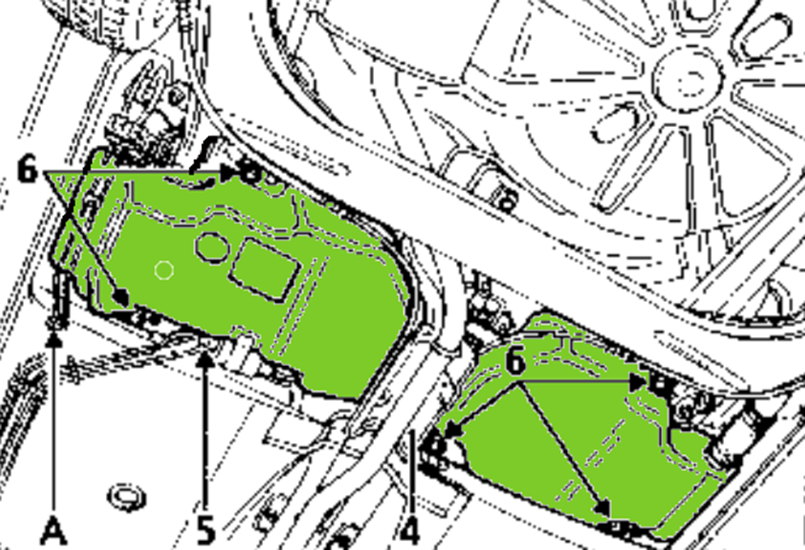 Addition of a battery bank.
 This is an example of the classic modifications, although many more are normally made, such as the passage of high voltage cables, the removal of the alternator, the addition of a vacuum pump for the braking system, and each and every one of these modifications needs to be certified in Spain by a competent laboratory designated by the Ministry of Industry.
So let's see what we are dealing with at the moment of truth.
This is an example of the classic modifications, although many more are normally made, such as the passage of high voltage cables, the removal of the alternator, the addition of a vacuum pump for the braking system, and each and every one of these modifications needs to be certified in Spain by a competent laboratory designated by the Ministry of Industry.
So let's see what we are dealing with at the moment of truth.
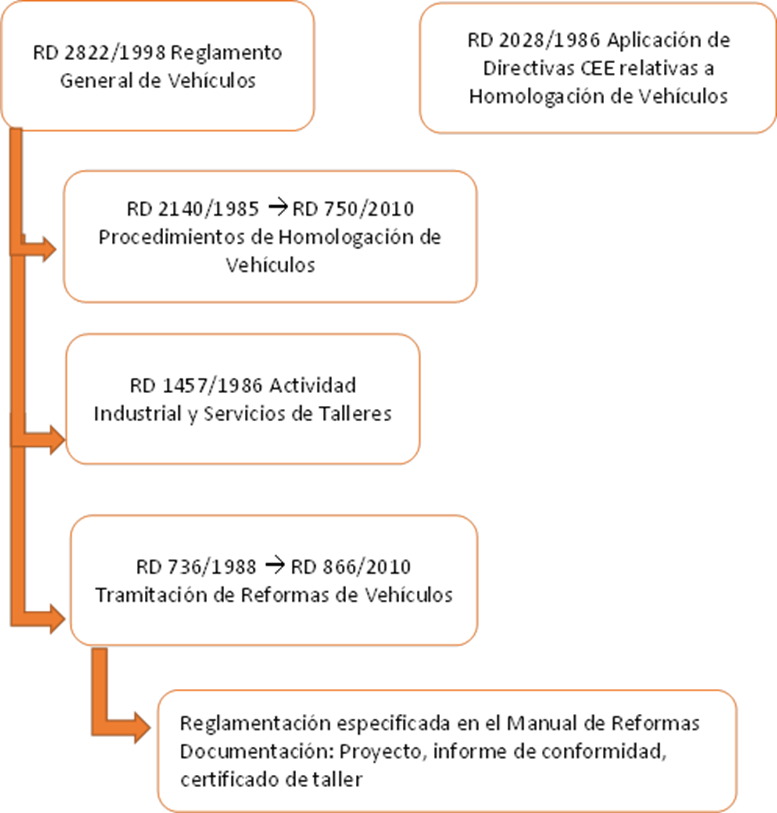 Finally we come to RD 866/2010, which deals with the processing of reforms made to vehicles after their registration. This is our case. In this RD, the reforms are typified, which are later developed and specified in the Reforms Manual. At last we see the light, but in reality, it is only the beginning. This reform manual lists all the reforms considered important for each type of vehicle, classifying them in what it calls Reform Codes, indicating the regulations or Regulatory Acts to be applied for their processing, the type of application of the same, the necessary documentation as well as specific tests in the technical inspection, if any.
In terms of documentation, there are three key points: technical project, certificate of conformity authorised refurbishment service and workshop certificate It doesn't seem too complicated!
And why do we say that arriving at the Reform Manual is only the beginning? Because this document refers to the European legislation in force. When we had already got used to the BOE, we entered the EUR-Lex! Again, dozens of regulations, many of them in the process of being updated.
One of the biggest drawbacks is that these regulations are applied in the manufacture of new vehicles. They were created to ensure that vehicles manufactured in Europe meet a series of requirements, mainly in terms of safety and the environment. We start from a different assumption from ours: we are not vehicle manufacturers, we simply want to transform some of the characteristics of an existing vehicle. This means that it is not always trivial to apply the requirements to our case, and that in some cases it is not clear whether we really have to do so. Of course we agree that it must be ensured that the reform does not act to the detriment of safety.
This drawback becomes more apparent when the practice of vehicle conversion in Spain is not very widespread. In reality, it is possible to count the number of cars that have been converted and legalised. This means that the official and consultative bodies are not always able to give you the right information, because they have not been in the situation before and do not know how to proceed. They talk about homologation of a vehicle when in reality we do not want to homologate, but to certify the reform in order to obtain a vehicle registration certificate. Ultimately it is the same, legalising the vehicle for circulation, but we understand that the second should be a simpler process? As an anecdote, when we started to ask for quotes to the authorised technical services of reforms, they included among the tests to be carried out a shock test.
Well, of the three key documents, the certificate of conformity is the most difficult to obtain. Not because it is difficult to obtain, but because of the lack of clarity and the high budget required. Once again, we are treated as manufacturers, but we are not: how can we consider legalising the renovation if the tests required to obtain the certificate of conformity cost around €30,000 (according to IDIADA)? A mere test and a formality, whose cost should be symbolic in order to encourage and promote the transformation of vehicles, is the biggest obstacle encountered in the whole process. Is bureaucracy holding back technological progress? It has been explained to us that the electromagnetic compatibility test is complex, and the necessary equipment is very expensive, but is it really that expensive?
Finally we come to RD 866/2010, which deals with the processing of reforms made to vehicles after their registration. This is our case. In this RD, the reforms are typified, which are later developed and specified in the Reforms Manual. At last we see the light, but in reality, it is only the beginning. This reform manual lists all the reforms considered important for each type of vehicle, classifying them in what it calls Reform Codes, indicating the regulations or Regulatory Acts to be applied for their processing, the type of application of the same, the necessary documentation as well as specific tests in the technical inspection, if any.
In terms of documentation, there are three key points: technical project, certificate of conformity authorised refurbishment service and workshop certificate It doesn't seem too complicated!
And why do we say that arriving at the Reform Manual is only the beginning? Because this document refers to the European legislation in force. When we had already got used to the BOE, we entered the EUR-Lex! Again, dozens of regulations, many of them in the process of being updated.
One of the biggest drawbacks is that these regulations are applied in the manufacture of new vehicles. They were created to ensure that vehicles manufactured in Europe meet a series of requirements, mainly in terms of safety and the environment. We start from a different assumption from ours: we are not vehicle manufacturers, we simply want to transform some of the characteristics of an existing vehicle. This means that it is not always trivial to apply the requirements to our case, and that in some cases it is not clear whether we really have to do so. Of course we agree that it must be ensured that the reform does not act to the detriment of safety.
This drawback becomes more apparent when the practice of vehicle conversion in Spain is not very widespread. In reality, it is possible to count the number of cars that have been converted and legalised. This means that the official and consultative bodies are not always able to give you the right information, because they have not been in the situation before and do not know how to proceed. They talk about homologation of a vehicle when in reality we do not want to homologate, but to certify the reform in order to obtain a vehicle registration certificate. Ultimately it is the same, legalising the vehicle for circulation, but we understand that the second should be a simpler process? As an anecdote, when we started to ask for quotes to the authorised technical services of reforms, they included among the tests to be carried out a shock test.
Well, of the three key documents, the certificate of conformity is the most difficult to obtain. Not because it is difficult to obtain, but because of the lack of clarity and the high budget required. Once again, we are treated as manufacturers, but we are not: how can we consider legalising the renovation if the tests required to obtain the certificate of conformity cost around €30,000 (according to IDIADA)? A mere test and a formality, whose cost should be symbolic in order to encourage and promote the transformation of vehicles, is the biggest obstacle encountered in the whole process. Is bureaucracy holding back technological progress? It has been explained to us that the electromagnetic compatibility test is complex, and the necessary equipment is very expensive, but is it really that expensive?
The state, through whatever government is in power, has no intention - quite the contrary - of encouraging the use of clean energy. Do you think it is going to give up taking more than half of what you pay to fill up your petrol tank in taxes?
But this is not unusual. The same goes for renewables. Again, the state does not allow you to install solar panels on the roof of your house to have free electricity. Of course, with ex-presidents of the government on the board of directors of the big companies, how can they not legislate in their favour!
In the case of conversions of cars with internal combustion engines to electric, if possible, an even more absurd and delirious legal perversion is created when the state imposes on you with a multitude of clumsy ambiguities and absurd bureaucracy the obligation to obtain technical certifications of already approved elements just because you have changed the engine of the vehicle. Because the rest of the mechanical parts and the chassis, which are much more important for safety, are the same and are already approved!
The automobile industry, which is also deeply involved in government, looks askance at your experiments because it knows that the barriers to entry for the production of electric vehicles, especially for urban mobility, are very low compared to the very costly production of today's obsolete and polluting combustion engines.
In fact, as Sergio Marchionne, president of FIAT-Chrysler, says, the car industry today is incapable of generating consistent profits, burning an impressive amount of capital on evolving an already obsolete and conceptually harmful combustion engine technology that would be more useful in any other sector, and he fears that with self-driving cars and the latest generation of batteries, the car manufacturing business will go to China in the hands of technology companies like Apple, Google or Samsung.
I would like to take this opportunity to thank you for your work and congratulate you for your initiative and your website while I study how to convert a small car into an electric car!
Hello Jordi,
I totally agree with you. But although it may not seem like it, the pressure for renewable energies (even if it is only social and media) is getting stronger and stronger. Electric mobility is a reality that sooner or later is going to impose itself, surely little by little, but like all changes, it always starts with small steps. The pressure of oil and oil taxes does not have to be a fact to stop advancing, even if it is at minuscule levels. If I convince you to convert your vehicle to electric, and you convince 3 more, that's 4 more. That's how it is.
Anyway, thanks for the comment, we must always be aware of who is goliath.
Best regards
Alex
While the country is bankrupt, swallowing and swallowing. They just need to change the laws and that's it. Because Spaniards steal from other Spaniards (all of them) but of course if we have to put up with thieves stealing from us, what do we do? Not to speak but it is worth saying that we regulate prostitution and with the infrastructure we have in our country in 5 years we are all rich. The key word is to flee from idiocy and long live the comradeship of the underground market.
I am delighted with the work you are doing, just as in the USA there are companies that even sell ready-made kits and a list of workshops for assembly and approval, here we are way behind,
It is clear that perhaps more media pressure should be applied, but it would help a lot if the city councils, especially those in cities with high pollution levels, would take measures to make things easier...car parks for recharging...green zones in commercial areas...while you shop and recharge your car, taxes...workshops..., although it is clear that without the government we do nothing, green government. We have the technology and the will, all we need is the will.
ev west is the company that sells these kits in the USA,
Hello, thank you for your comments. I agree with you, but something tells me that there is still a long way to go in facilitating the work for the sale of these kits, because of the bureaucracy and the documentation required in the European Union. Best regards
Hello, I would like to contact you about these kits + homologation (even if it is outside Spain in Europe) since we need to homologate the car if or if and without spending 35000 euros in laboratories and tests. Best regards,
César
Good morning:
Good work, I encourage you to keep up the good work,
We have to fight to make the recycled electric vehicle an option in Spain.
We would like to see the possibility of converting a delivery van, such as a citroen berlingo / peugeot partner.
Good.
I like your initiative very much.
I also know from experience how difficult it is to get it homologated. I wanted to convert a car to hydrogen and no more and no less than they asked me for the homologation certification of the vehicle brand... the car manufacturer had to give me their approval of my modifications... as if they had nothing else to do but to check the modifications of individuals in their vehicles.
The conclusion I came to is that you practically have to be a vehicle manufacturer to be able to modify a vehicle made by you, as I don't think a manufacturer will ever give you their approval, as it doesn't do them any good and they can get into trouble if you have done something wrong in terms of your own safety or the safety of others.
Good morning.
I wonder what happens with security. I don't rule out that, in a personal project, things are done with good intentions, or even with care. But in the real world, there are a lot of bunglers, who make you a fix, and then you have accidents.
First of all, we are talking about providing a "sustainable" solution to a problem (mobility). But there will also be those who long for their old classic car and want to extend its life.
To bear in mind: it is not only the fuel that pollutes. The process of manufacturing and scrapping the elements that make up a vehicle has as much or more impact (carbon footprint) than the use itself. This is both positive and negative: we are reusing a structure, adding some much more polluting components (batteries, engine, etc.) and discarding others (which I suppose will be recycled...).
The second point to bear in mind. An old car has inferior safety measures to a new generation car, and I am not only referring to maintenance, but also to elements and systems that are appearing in the new regulations.
At this point, we can come to the conclusion that, at best, a person will want to drive his Renault 5 of the year 80, without a/c, d/a, e/e, c/c, not to mention fog lights, third brake light, abs, esp... I would even dare to say that they have no headrests or seat belts in the back seats (depending on the model, maybe).
Not even, for example, a Renault 19 of 92 (25 years old, already a classic), much more equipped, I don't think it would be worth it, because one day the windows fail, another day the doors lock, etc.
In conclusion, you are not going to make a practical car.
And to put it on a track, I don't know if you'll need homologations, but I suppose other users will want the car next to them not to lose parts... But on the street, even less.
On top of all that, there is the safety of an electric system. I don't think the Prius will spark, not least because it will have been certified and approved once and produced a million times more. But you have to be careful about that. The kits look good, because they seem to come ready to isolate everything well, and they are designed for that (it's not like putting a lift motor in each wheel...).
In short, your project is for lovers of your classic car, or for you to prepare a sufficiently large set of Twingos with similar characteristics, in order to amortise the cost of homologation.
And to do it in a serious way, having tested everything, consumption, autonomy, charging capacity, performance, limits (temperature, etc.), safety... even the possibility of using a small auxiliary fuel engine, or brakes with regenerative charging capacity, as well as an efficient charging system (plug-in). On the other hand, I hope that one day, the batteries will be recharged like the old video cassette or CD chargers, putting the discharged ones in and returning the used ones, to charge them without having to leave the car stationary.
In that case, I do see the feasibility (technically, ecologically, economically and with a relatively practical sense) of converting a combustion car to electric. The rest is a waste of money.
Greetings and thanks for the site!
Hello, we could also look at the possibility of homologating the vehicle modified to electric in a country of the European Union, according to its regulations and at more affordable prices, I do not know if it would have to keep the registration of that country and also if it would be economically worthwhile or if our lousy and corrupt politicians have also closed that possibility. We Spaniards are a too tolerant people with the abuse and oppression to which politicians, civil servants, bureaucracies, administrative silence, bad judicial system . . . . . . . . . . .
First of all, thank you very much for your work, it has become clear to me what is stopping people from switching to electric vehicles.
I'm just curious, can all this bureaucracy be avoided by having the vehicle homologated in another EU country, so by receiving the homologation certificate from the other country, are there any problems in validating this certificate?
Hello,
This is an avenue we have not explored. If anyone has done it or wants to do it, we will help where we can with our experience.
Best regards
But what are they going to recognise you? Can't you see that they're really crazy? They ask for a car crash test! To freak out! To say that you have built a car is ok, but to remove an engine and put batteries that weigh even less? It is not enough to them to publish a guide with three keys as they are not mounted, fixed and distributed the batteries (neither it is necessary that tapoco is distributed the passageros with manual) to prohibit big things.
In short! The country that lives certitulis does not know how to get anything else out of it!
Hello, I have a question, and if I convert my old car to electric in Germany and I bring it to Spain registering it as electric, is it profitable, can it be done, what steps do I have to follow, thank you.
Hello,
Yes, it can be done. But we don't know if it will be worth it with the transfers and the headaches and logistical problems.
Best regards
Hello,
I am excited to see what you are doing. I've been in the sector for 12 years and I'm going to tell you what someone in the ministry told me under the table. Since Spain joined the EU, the car industry has had to be eliminated in order to promote the tourism industry. Hence almost all the obstacles, confusion and problems to homologate any reform or new car created here.
It is possible (despite being the only EU country that applies all the regulations that have been approved, what a coincidence), but if you make it sufficiently expensive and cumbersome, it ends up not being interesting. All my encouragement and good luck !
Hello,
Such a comment from the Ministry is a bit scary.
I am a mechanic and I have been working on a project for an atrocious time and I have converted an opel Corsa to electric with many setbacks but I have been improving and I think it is great to be able to support you, even with my opinion, I totally agree with the information you are spreading and by joining together one day we will get them to recognise that we are right, we have to recycle.
Good morning. What an interesting website!
I am already combining my car with an electric scooter, and I would love to be able to convert my car and use 100% electric mobility.
But how is the bureaucratic situation today (January 2018)?
I see that the last blog post rages from mid-2016.
Has anything changed? Has the government made it easier for us to change the type of fuel we use to get around? Shouldn't it be something more than simple taking into account that the car has already passed all the necessary homologations,,,, another thing is that one wants to put more power, more weight, or any change in its characteristics of origin..... but if we stay within the parameters of the original model???? It is impotent to see that things like this could be done to achieve a huge profit in a very short time,,,,, but as it is not "business" for some, come to put obstacles and more obstacles ....
Hopefully there will be more progress in this direction. I think the most ecological thing is not to have to re-produce a car from scratch, but to use a petrol or diesel car. ....
Thank you very much for your project and I send you all my support from Barcelona !!!!
Good,
The bureaucratic issues remain the same or more difficult, but this does not prevent us from homologating the Renault Twingo.
Best regards
For everyone's information you can already buy a new Tesla model3 electric car for 33000€.
It's cheaper than converting and you get a lifetime warranty on everything except tyres, which you pay for yourself.
In addition, the fast charges of the superchargers charge the cars in half an hour and a range of 400 kilometres until a further charge of half an hour more.
They also have built-in artificial intelligence autopilot and avoid accidents for you. They even look for parking spaces while you're shopping or running late for a meeting.
I could be telling the Bible in verse about this Tesla Motors Model 3 for €33,000.
See for yourselves at http://www.teslamotors.
By this I mean that the transformation of a combustion vehicle to electric 100% is very expensive and should be done for free or at least help to make this possible for all budgets since today there are luxury cars with lifetime warranty and free lifetime recharges of energy and high-level finishes for 33.000€ brand new.
Greetings to all.
Well, let's feed the Americans or the Chinese, who already manufacture them cheaper and more efficiently. I would bet on companies like this one, Spanish, but of course Amancio Ortega, I suppose they didn't make it easy for him either.
Hello Vincent,
I don't know much about the subject and I see that your comment is old but I think it has never been sold for that price, no? In Spain the model 3 starts at around 50k Euros? https://www.diariomotor.com/coche/tesla-model-3/
Best regards,
Eduardo
If it is true that homologation in other EU countries is cheaper and quicker, the solution is written. The transformation is done here and it is approved outside .....
Congratulations on your work.
This is a subject that has interested me for a long time, as I have two old vehicles: one fifteen years old and the other twenty-two years old. I have spent my money on both of them to keep them useful and safe, and now I would like to upgrade and transform the older one, but the price and the bureaucracy are not in my favour.
If this does not evolve and in view of the price of new vehicles, I will have to go by bus.
The central issue is that the government seems to protect the business of large companies... That somehow influence their decisions... But this is a short-sighted view, the development of small conversion companies in the future could become a fabric of suppliers for large manufacturers, a buyers' market accustomed to the advantages of electrics... A 'win to win' scenario. Unfortunately in Spain there is a common 'lose to win' approach.
in spain nothing is done while all our government and those who come and those who came do not want to govern but to steal. This is how they turn Spain into the country of the chorizo. Just vary about 10 laws on electric and solar cars, regulation of sex workers, that are compatible with our constitution and that on top of that they work against everyone illegally. Not to mention that anyone can hack your car and kill you because they don't have access to a manual control. Not to mention putting little plants on balconies and windows and roofs of big cities and have clean air as if you were in the mountains and avoid hundreds of thousands of deaths from cancer and others a year. This must be bottoming out by now and if not, long live the black economy and a good quality black market at a good price. If the government is useless someone will have to do it. I am not allowed to camp in the mountains because I scare the animals. Human animals too, except when I carry money. Joña
Manufacture me in the workshop jun electric quadricycle with a truck alternator some batteries also powerful truck put a couple of solar panels on top to charge and 80km/h and if you want a generator gasois inverter and you have a hybrid for about 1500 euros and zero cost. Cachondeo is what everyone here is going for. And this with the cost of the material in Spain that in other countries is less than half. They also want to tax the sun. And I would like to know how far the Spaniards are going to swallow because here he who does not run flies. And you steal from me, I steal from your brother, the government steals from both of us and in the end everything will be left to the Chinese who don't even speak Spanish. We have to boost the economy and the black economy given the uselessness of our governments who, by the way, do the opposite of what the constitution says. In other words, let everyone do what they want and that's that.
And is it not possible, for example, to buy a car in the USA or another country that allows it to be converted more easily, have it homologated and import it to Spain once it has been homologated?
Because the prices you indicate, you get the feeling that it would be much cheaper this way.
Hello,
Definitely not in the USA, because conversions done there for the EU are as if you had done them in a garage, they are not valid.
Those made in the EU would have to be looked at, with the logistical costs.
Best regards
I want to know if I can convert my car in another european country and then bring it back to spain to drive it..thanks.
Hello,
Yes you can, but we don't know the technical obstacles on return, how the DGT will interpret the entries in the technical data sheet with respect to the homologated reforms in another country.
Best regards
Hello, I am also a vehicle electrifier. I have already been where you have been. It is complicated and expensive, indeed. But do not come to say that it is only in Spain, because although it differs between countries some things, the regulation on which the 750/2010 is based is the 2007/46 EC which is common to all Europe and the transformations and their requirements are similar throughout the EU. In fact I tried to pass in RDW (Holland) and TÜV and it was not worth it.
Hello,
Yes, if the directives and regulations are of European application, what is Spanish is the interpretation of these regulations. In some countries they are interpreted for €2500 per test and in others for €100.
If you like, tell us about your experience in the Netherlands.
Best regards
For example RDW
https://www.rdw.nl/zakelijk/branches/fabrikanten-en-importeurs/english-information-about-typeapprovals/type-approval-for-vehicles/safety-requirements
Hello, is it not possible to transform a car (with foreign registration?), homologate it in another country where it is really simple and cheap and once the COC is obtained there, register it in Spain?
Hello,
Yes, it could be done. We would have to see what technical impediments the DGT would put in our way when they see the foreign Ficha técnica with the homologations of the reforms to which the vehicle has been subjected.
It is an option, which we have not explored.
Best regards
Very good
I believe that the conversion from combustion to electric vehicles is a road of no return.
As always, the bureaucratic impediment goes hand in hand with the private capital of oil and automotive companies interested only in continuing to make money.
profits with no regard for the environment or the economics of consumers.
But the road, as I say, has no turning back.
I am one more who wants to convert his vehicle to electric.
Congratulations on your work.
Best regards.
Thank you for sharing this information.
I don't know if you are still active. Seeing that the last entry is from 2016 and precisely about the bureaucracy holding you back, I hope that this has not prevented you from continuing with your excellent work.
Regarding the price set by IDIADA, you mention €30,000. However, you comment in the disadvantages that the cost is between 1,500 and 8,000 euros).
In any case, I understand that for LPG or CNG conversion there is a "standard" homologation. Would it be possible to get something similar for EV conversion? I wonder what it was at the time that made things easier with gas and whether a similar scenario will soon be possible with electrification.
If this is achieved, I understand that this would open the door to retrofitting, but would they all have to follow the same style guide? E.g.: always put batteries in a certain location, or not homologate vehicles older than X years.
Congratulations on your efforts.
Greetings.
Hello,
Yes, we are still active. Yes, those are the homologation prices given by IDIADA at that time, we have not contacted them again.
This standard homologation, called Functional Equipment, can be used for a short run of vehicles, but it is not our idea at the moment, it is easier for us to homologate the conversions individually for the time being.
Yes, not just the same style guide, but dozens and dozens of rules and articles to follow.
Best regards
Very good page and the only conclusion I draw is that the multinationals in the sector don't want competition... !! that's what the politicians we vote against must legislate against!
Well, I have a Twingo that I hardly use and I have seen the conversion and I would be very interested in doing it, but of course with more affordable costs... I am not going to be ecological recycling a Twingo so it will be more expensive than a 2015 Prius.
Having said that, I would like you to explain why you do not contemplate the homologation of small series or "functional equipment". Moreover, could you offer to whoever is interested in contracting you only the legal part and that each one acquires the materials and then assembles them in a reliable workshop?
Greetings
Hello,
We are working precisely on this idea, because of the difficulties in individual homologations. We are grouping interested parties in the same model.
This is a summary of the 800 petitions we have so far.
Best regards
I have a question, I have an EV that was wrongly homologated by the manufacturer, an Opel Ampera, they take the data of the maximum power of 111kw to calculate the CVF that comes out 21cvf an absurdity when the electric motor is of 150cv a combustion engine to charge the batteries of 85cv and the battery is of 10kw, in the back of the coc gives a consumption of 130wh/km during 83km we are many affected by this subject paying 250€ of taxes as if it was a truck or a ferrari, thanks.
Hello,
In my experience this is a fight with the administration and the official on duty.
I would investigate in depth what regulation is taken to make the power calculation, and see if it really specifies how it is calculated and if it does not say that the power of the electric motor must be added. Because by the same rule of three, they would have to add up the power of all the electric motors of a traditional vehicle, such as the starter motor, the pumps or air conditioning, etc., and they don't do that. But before defending this thesis, I encourage you to join and read the regulations where it is specified how the calculation is done.
Best regards and good luck.
i have asked in the school of engineers of zaragoza. at this moment they give the sensation that nothing exists congreto in the colleges of engineers, is where they have it but clear they do not put sticks, you fill up some forms asta they put you an engineer
general strike in this country as soon as they smell to create jobs already this bundled I am industrial master of automobile or electro mechanic at this moment I am in conditions to create 16 jobs I have four
engineers two women in europe are already being homologated let's go to the street and see what happens I wait for you.
an allusion
Hello: Does anyone know the address or contact details of this company "ELEKTROCARS" ?
Do you know of any company that is currently converting cars to electric.
You can also reply to my email address, it's easier for me.
calima_barco@yahoo.es
Thank you very much.
MAE
Hello,
You can contact us using the contact form.
Best regards
Governments are to blame, they always want to get rich at our expense, they are not interested in ecology.
Only the money
I am writing in April 2020, during the state of alarm and confinement due to Covid-19. First of all congratulations for the work done and the information. I see that the last entry is from September 2019, are you still active and is there any news regarding the approval processes in Spain? Have you worked alternative routes in other EU countries or do you know of any case?
Thank you very much!
Yes, we have studied the routes in the EU, and it is not viable for our project, because of the logistics and then having to continue to deal with the Ministry of Industry and ITVs to import the conversions. The homologation issue is now more complicated with the new regulations that include battery testing. So we are adapting for it. Thanks
One more question: in your experience with the Twingo, what was the cost of the homologation process?
Thank you!
The homologation of the Twingo cost around 6000€-7000€..... But it is not only the economic cost but also the resources in hours and time that make it not worthwhile for an individual reform...but for 20 or more vehicles.
I am an absolute novice in mechanical matters but I am passionate about the work you are doing.
Even after reading several articles and trying to find the answer, I still have no way to clarify a doubt.
As I understand it, the purpose of the MOT is to check the safety of the vehicle and to check that it does not pollute more than the legal limit. So, if I have a combustion car with a passed MOT and I modify the engine, changing it for another one that pollutes less, why is the homologation so expensive?
Battery homologation and political conspiracies aside, of course.
Well, the ITVs not only check that the car is safe but also that the modifications you have made are approved, and approving them is expensive, who knows why, due to lack of laboratories, lack of interest or not wanting to make the conversion industry move forward. Namely.
It is simply a question of seeing that there is a market niche and not being hypocrites. By getting involved in facilitating massive conversions (just like the LPG/CNG conversions, which for 1000-1500€ you can have them converted), a lot of money, work, parts,... and above all, it would accelerate the achievement of the apparent and hypocritical governmental dogma of caring for the planet. There are real, direct, easy solutions and they do not apply them, HYPOCRITES!!! !!!!. I would add that the serious thing is that we are all hypocrites because we choose them as our representatives, and they are not very deceitful, we know that they lie to us but I would not like to say that we like it but we do not dislike it either. The ordinary Spaniard must come out of his fearful conservatism and his bubble of constant resignation, he must evolve and believe more in himself.
Continuing with electric cars, imagine if we were to force them to focus on this issue by 2022, and I believe that it is right now when we should push this: the climate for change is already on the streets and people are still using combustion/explosion cars in very good condition. With a whole infrastructure of the electric changeover with measures, aids, charging points,... Spain, Europe,... would have the conversion of the national/European car fleet in a very short time. In addition, people could have more savings, they would no longer spend on the ruin of a new car, and the environmental problem in this part would be solved.
I would bet that if with the same desire that they take the tremendous salary of parliamentarians to make the slacker day after day in Parliament (eye we all allow it, we continue to vote for them, we force them to something else) and the shameful and dastardly behaviour, were focused among other things on this, I would ensure that in 2025, without exaggeration, we would already have more than 50% of electric cars. Who would not convert their current car that is working well, that is in good condition for 3000€-4000€ maximum to electric? These prices would be achieved and would be realistic if all that I indicate were encouraged, costs, labour, parts, components, etc. would be reduced... By the way, who remembers the beginnings of mobile phones? They were for the rich, they were huge and cost a lot of money, but they realised that if they allowed this luxury to the whole population they would earn more, and also with the possibility of massively testing a technology and solve more effectively the problems they had.
This resistance to something so logical, makes me think that if they just want to keep us under control and that the ordinary working man is trapped with a new car that is not worth what is being asked for it. A new car is a rip-off, but people have got used to paying such exorbitant prices for the mere whim of wanting to change, and perhaps having a 10 year old car that with 3000-4000€ would have the possibility of changing car; obviously the car in general has to be in good condition. A 10-15 year old car with a proper electrical conversion is perfectly valid and would compete with many new cars that are real sardines; and we would also reduce the cost of manufacturing another vehicle (less pollution, materials, more employment, more savings...).
I believe that in the end what I want will be imposed, but incomprehensibly it will take time, they want to see us and dominate us by having us trapped and deceived by their vile hypocritical actions, and remember, it is we who are to blame and we allow them to be our representatives. We don't care, because we keep stumbling over the same stone, election after election. Let us evolve as individuals and society and its representatives will evolve.