




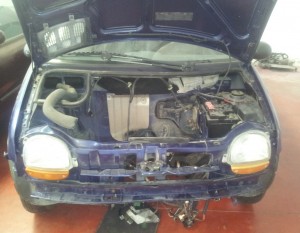
Converting a petrol or diesel vehicle to electric is the most sustainable and economical way to drive an electric car. The main idea is to reuse all parts of the vehicle that are not related to the combustion engine and replace the combustion engine with an electric motor. Engine, radiator, fuel tank
The chassis, exhaust pipe, alternator, etc. are eliminated, thus reducing the weight of the vehicle. By already having a chassis with everything necessary for driving, such as interior, brakes, tyres, damping, etc., all the effort is reduced to the installation and design of an electric motor system with its corresponding batteries.
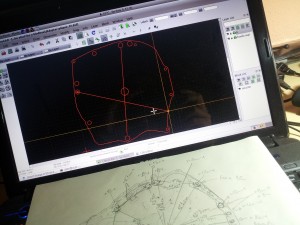
It is very important to choose a good design of the electrical system, both the motor and the battery pack and battery controller, so that in both power and speed, the car performs as well as it did with the petrol engine. Too much power could damage the traction components or fail to respond to braking as originally designed, and too little power would cause the gearchanges to be too slow.
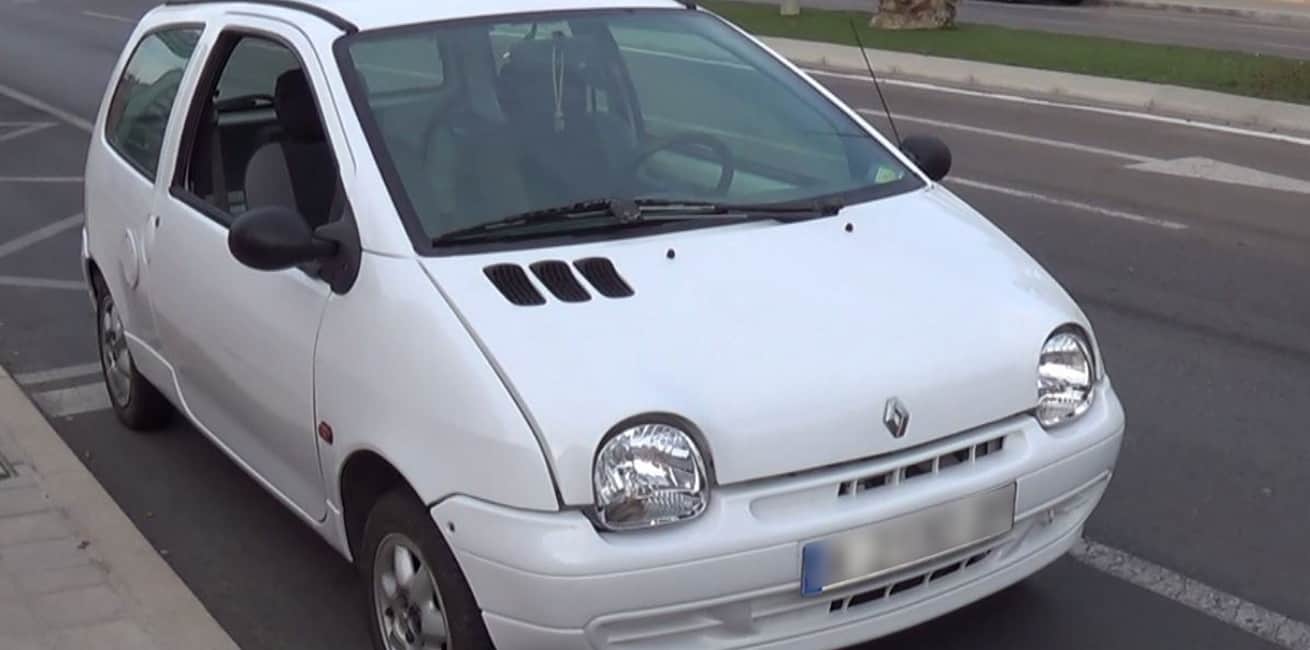
Elektrun is a project that was born two years ago to test the concept of converting a small, electric, utilitarian, short-distance vehicle, ideal for city journeys. A Renault Twingo was chosen to build a prototype, a car of low weight and reduced size, which after two years of design, testing and experimentation, we have managed to put it into operation.
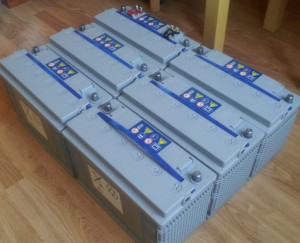
The main stumbling block in a conversion of this type is the range given by the batteries. Nowadays there are already vehicles with a range of up to 700 km, but it is true that for this range you need a pack of between 70 or 80 kW. Our prototype has a 7.4 kW pack.
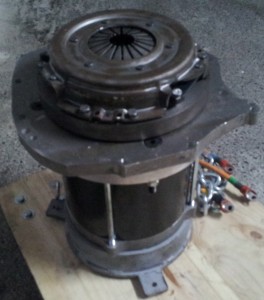
This prototype has an AC motor of 15Kw and a torque of 80Nm, a battery pack of 72V and 100Ah, with a controller of up to 350 amps and 80V. This can give us a top speed of up to 90km/h in fifth gear.
Early tests showed that the overall weight of the conversion did not affect sharp cornering, the damping responded as expected, and by eliminating noise, the ride is more pleasant.
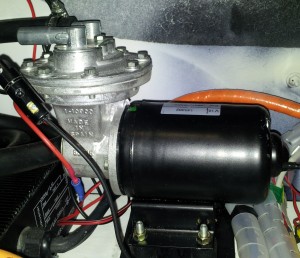
A vacuum pump was additionally installed to assist the braking system. Braking is also similar to a Twingo, the car responds to braking with force and holds it for as long as necessary on a ramp.
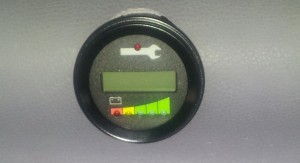
A small display was installed inside to monitor the battery, current, engine temperature, state of charge, etc. at all times.
The lights and interior fittings such as electric windows, radio, ventilation, windscreen wipers were also retained.
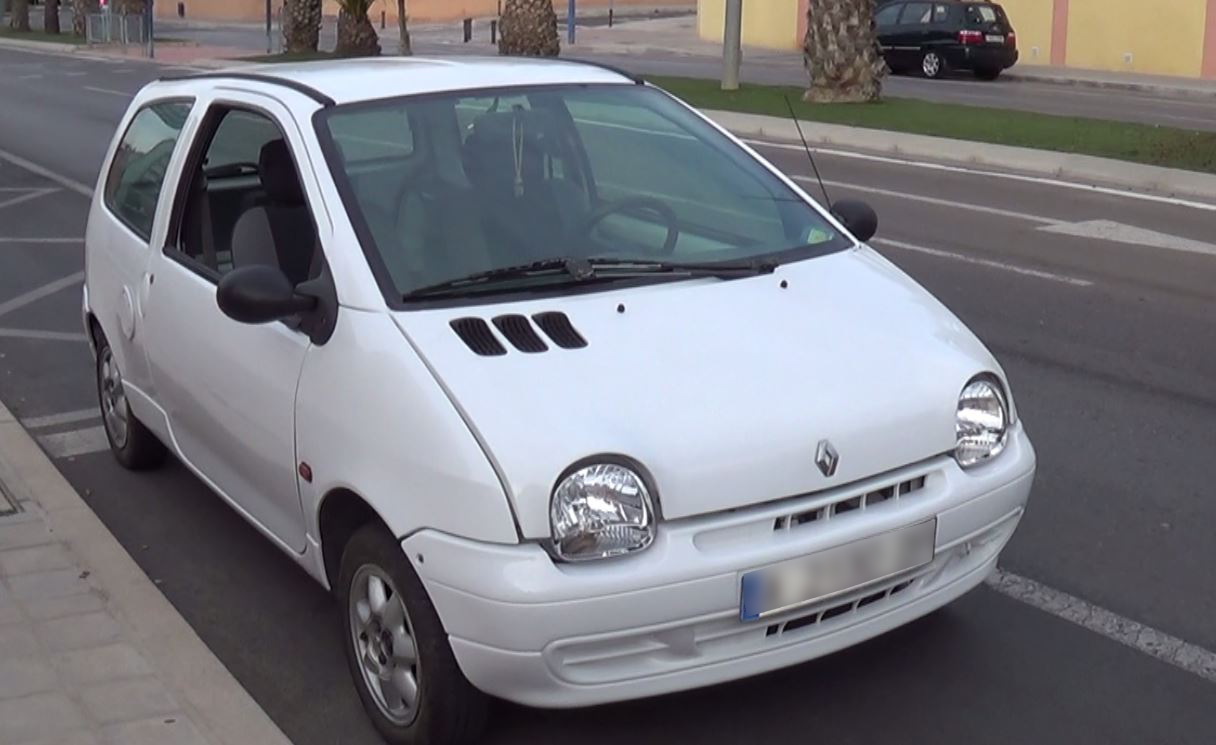
This vehicle takes about 8 hours to charge the pack, although there are more powerful chargers that could reduce this time from 6 to 4 hours.
You can see the final result in this video:
I love it.
I was looking on the net how to convert an old car and I came across this web. I like the project, I would like to have a place and money to do something like this? By the way, you haven't talked about the gearbox, do you keep it? I mean, if it's a single gear or if it has the normal 5 gears + reverse gear of the normal car. Maybe it is the cheapest way to convert it. And how much has the conversion cost you and if you have to homologate it or go through the industry or just do the conversion and that's it?
My favourite car since I was a kid is the 1912 Rolls Royce Silver Ghost, hence my email... and I would love to find one without an engine and convert it to electric, a futuristic conversion like the locomotive in the last film of Back to the Future. Dreams...
Thank you
Thank you. Well, the cost of the materials is around 9000€... it depends on many variables...if you get the parts to manufacture at the first time, errors with wiring..but well..once the design is controlled..for a small car it should not go up more than 9000€ to 10000€.
Good morning. I love your project. I have something like that too, but still only in my head. Congratulations.
Hi, my problem is homologation. I have a donor car and an amateur mechanic who might try it, but everyone I ask tells me that homologation in Spain is crazy, difficult and expensive. However when I look at the procedure I see that in theory is to take the car to an official company that would make a report (900 euros) and if they give the OK, review in an ITV and to circulate, This is the link where he explains it: http://forococheselectricos.com/2009/08/pasos-para-homologar-la-conversion-de.html
Is this correct or does it get complicated when it comes down to it?
Hello,
Both theories are right. Homologation in Spain is difficult and expensive. But to homologate you have to take 2 things into account.
- One, that the modifications made to the vehicle are within the current regulations, and here we must take into account masses, braking, power, electromagnetic emissions and electrical regulations, etc., among other things.
- Two, that the prices charged by a company are not 900€, nor are they standard. it depends on the modifications made to the vehicle and how they have been done. As a general rule, the more modifications to the vehicle, the more tests have to be done, and the more expensive it will be.
Best regards
Alex
Congratulations on the project!
I'm looking into converting a utility and I really liked your website.
Greetings,
Jordi
Congratulations on what you have achieved, it is very good.
I have a question, is it necessary to depress the clutch on an electric car to change gears? I always wondered about that.
Best wishes and good luck.
Hello,
It depends on whether you leave the clutch in the design or not. It depends on how you want to do the conversion.
We do.
Best regards
Congratulations on the initiative!
So I understand that the Twingo is already homologated, in which case could you convert my Twingo and how much would it cost?
Greetings!
Hello,
Your Twingo could be converted if and only if we make it EXACTLY the same as ours, with the same components and the same design.
Best regards
Hi. Could it be to convert combustion to electric with extended range, leaving the engine as a generator, electric motors in the wheels and batteries in the spaces freed from the old mechanics?
Hello,
Yes, it could, but the idea was to convert to electric so as to never have to use petrol or diesel again.
Best regards
Today I came across this website, I've been watching videos on youtube for a while and they were all American, in Spain it's not as easy as over there, would it be possible to do something like this in a classic vw van, are you up for it?
Hello,
The furgos are much more expensive because of the amount of batteries that need to be fitted. However, there are quite a few interested in T1, T2 and T3, so we encourage you to sign up using the form on the contact page and see if there are enough interested parties.
Best regards
Hi, I have a 70 beetle and have been thinking about converting it for a while. If a multiple conversion of this model would be possible, I would be very interested.
Thank you and good luck!
Hello,
Please contact us via the contact page so that we can sign you up. For legal and data protection reasons, if you do not ask us via the form, we will not be able to contact you from a post.
Best regards and we look forward to hearing from you on the contact page.
Hello, congratulations on your initiative. Could you create a platform to apply for a more dynamic and economical homologation for all provinces?
This would help people and the environment.
Hello,
While we comply with the European directives, I can also tell you that we are working on it, if not first in all provinces, then in places equidistant to all of them, and of course with cheaper, faster and better homologation services.
Best regards
I want to convert my mini classic from c i to electro how can I contact you for this conversation?
Hello,
We are in Madrid, Spain, we are sorry we cannot help you because of the distance to Mexico.
Best regards and good luck.
WHAT A DRAG. I have an electric Kona and I wouldn't swap it for a combustion engine. I would like to see if I can find a classic to convert it to electric... but the costs and above all the autonomy are holding me back. I've heard that there are classics that have been converted to electric with up to 700Km of autonomy... Is it true, and if so, how much does it cost in euros with the car homologated and ready to drive?
Congratulations on the website and the project,
Hello,
Well, autonomy is directly proportional to the budget you have and the volume or space you can fit in the vehicle to be converted.
At a glance, today, for a vehicle weighing 1,500kg to have a range of 700km, you would have to spend between 20000€ and 30000€ on batteries alone.
Best regards
You don't talk about the range, so it is understood that it is quite low. If a normal electric car uses about 12 kW per 100 kilometres, you would be talking about 50 kilometres with 7 kilowatts/h. That's not much. That's not very much.
Hello,
Well, it depends on the engine, the consumption at the time, etc... anyway this is a prototype, a proof of concept, so for this work the autonomy is the least important thing. Nevertheless, it reaches 90 km in urban driving.
Best regards
I want to study this, how do I go about it?
The next course will be in March 2022. Please contact us using the contact form. Thank you.